
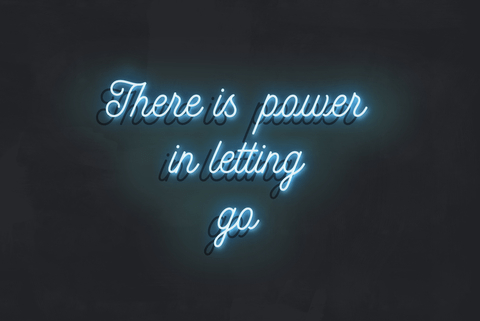
The Exhaustion of Trying to Control Everything
Have you ever stayed awake at night replaying conversations, worrying about the future, or ruminating about decisions you have already made?
Many of us spend so much time trying to control things that were never ours to carry.
The result?
Stress, anxiety, overwhelm, burnout, and emotional exhaustion.
Peace begins when we learn to release what we cannot control and focus on what we can.
Let’s explore why letting go is so difficult and how you can begin releasing what is weighing you down.
Why We Try to Control Everything
There was a time in my life when I thought I had complete control over my life. Though I thought God was the ultimate designer of all lives, I really thought I was in total control of mine. My motto used to be, “When there is a will, there is a way.” When things didn’t happen the way I planned, I would try to orchestrate a scenario where the outcome would be what I wanted and expected God to cosign it. How many of you know that that will only last for so long? God allowed several disruptions in my life to demonstrate to me who was ultimately in control and let me learn that divine timing is the best timing there is.
My desire to control every facet of my life arose because of fears of uncertainty, failure, disappointment, and my kryptonite, perfectionism.
Control feels like protection, but sometimes it becomes a prison.
Do not get me wrong, we should definitely map out and plan our lives for the best possible outcomes, but we must allow room for God to work in our lives. We cannot control everything, no matter how hard we try. There will always be an illness, death, separation, or some other disruption we did not plan. When these occur, we realize that we are a part of a larger plan and that we are all subject to a grand design.
Truth be told, many times God has a better plan than the one you designed. You only have to allow him to lead you into the master plan he has for you.
Signs You May Be Holding on Too Tightly
During that season of my life, when it seemed everything that could go wrong did, oh how I tried to make things work. As soon as I put out one fire, another would light up. It got to the point where I was no longer putting out the fires but had several fires burning all at the same time. I was holding on so tightly to the idea that I could control what was happening, but there are some things you cannot control. You cannot control dementia; you cannot control not having the knowledge you need at the moment (this was before current internet mobility).
Though I prayed about it, what I needed to do was give it to God and have him help me, but I had a tough time letting go, even letting go to him.
If you find yourself constantly overthinking, replaying conversations, having difficulty relaxing, struggling with uncertainty, feeling responsible for other people’s emotions, or constantly planning for worst-case scenarios, you, my friend, may be holding on too tightly to something beyond your control.
What You Cannot Control
There are many things we cannot control. Try as we might, the only thing we can control is ourselves, and some of us cannot even do that. We have full control over our actions, words, and deeds. Now there may be situations that influence how we respond, but ultimately that response is up to us. What we do not have control over is:
- Other people’s thoughts and opinions– I spent a lot of wasted time worrying about what others thought of me. Now I know that what others think of me is none of my business. As long as I operate in integrity and truth, your opinion of me does not affect what I think of myself.
- Other people’s choices and behaviors– This was the most difficult lesson I had to learn because there were things done to me that were beyond cruel; I know I did not deserve the treatment I had received but kept wondering what I could have done differently to change the outcome. I had to realize there was nothing I could have done. Some people will vilify you, and it will not be because of anything you have done, but because of their own lifestyles, projections, and insecurities.
- The Past– Sometimes we do not make the best decisions for ourselves or others. We cannot change a poor decision made in the past. All we can do is grow from it. Learn the lesson it taught us and try our best not to make that mistake in the future. No amount of worrying can change the past.
- Unexpected life events-These events sometimes shake us to our core. The death or illness of a loved one, a divorce, the loss of a job, or some other event that catches us off guard. These events are beyond the scope of our control. We have to do our best to cope with the loss without letting it totally change who we are as people.
- The future-We do not know what the future holds. Sure, we can try to shape the future we desire. We can plan for our education, the type of life partner we want, friendship circles, our careers, but we have no idea how these relationships and situations will turn out. So, we might as well stop worrying about what we cannot yet see and hope for the best possible outcome.
- How quickly things happen-I am a witness that one minute you can have the world in the palm of your hands and the next minute you can be living in the middle of a horror movie. Things can change that rapidly. It is often beyond our control. All we can do is try to navigate the circumstances to the best of our ability.
The fact of the matter is that no amount of worrying can change what is outside of your control. There are many things we have to maneuver in this life that come to us at times we would not want, but we have no control over these events, so release what you cannot control.
What You Can Control
While there are many things we cannot control, there are many things we can. Again, we can only control ourselves, and here are a few things we can control.
- Your thoughts– You have total control of what you think. You can choose what you think about. Are you going to focus on the good or the bad? Remember that what you allow in your thoughts is what you put out into the universe. So, think about whatever is true, just, kind, and lovely.
- Your Boundaries– A person without boundaries is a person without peace. If you allow others to invade your space and time without clear guidelines, you will live in chaos. Boundaries are the walls that protect us from giving so much of ourselves that we end up empty. You can’t pour from an empty cup.
- Your responses-There was a time in my life when, as soon as I felt any form of disrespect, I would respond with disrespect. I have learned that not all actions deserve a reaction. Some people disrespect you to provoke a negative response. Sometimes the best response you can give is silence. It says you are not even worth my time or my words.
- Your habits– What you do is more important than what you say. If your habits do not reflect the life you want to live, do something about it. If you want a healthier body, eat right and exercise. If you want to increase your knowledge, read more, view podcasts, or take a course. Your habits reflect who you are, not who you say you are.
- Your mindset– You can choose whether or not you think positively or negatively. Choosing a growth mindset leads to success and prosperity. When we choose to see things from the lens of developing ourselves in any particular area, growth in that area is the result. We should always be learners in all stages of life.
- How you spend your time– How you spend your time will be the fruit you see in your life. If you spend positive time with friends and family, strong familial relationships and friendships should be your fruit. If you spend a lot of time watching T.V. and doomscrolling, a lack of productivity will be your fruit. Time waits for no one, so make your time count.
- How you care for yourself– I have always been overweight, but I made it my business to always look presentable. What people see when they meet you matters. How you care for yourself will be experienced by others, so make sure you take the time to do it.
Ultimately, our power lives in our ability to control ourselves, not the people and things around us. So, make sure your responses to life are a positive reflection of who you are.
How to Let Go of What You Cannot Control
Releasing what we cannot control can be difficult. Admitting we cannot control a situation often signifies to our psyche that we are not in control of our lives. For some of us who plan everything, who dot every i and cross every t, that could be a hard pill to swallow, but admitting that there is a greater power in control will help you release some of the weight. No matter what your beliefs are, you have to admit that all power is not always in our hands. Sometimes we have to let go to have order in our lives again.
If you are struggling to let go, here are a few ways that you can begin the task of releasing what you cannot control.
- Identify What is Within Your Control
For this, I have an exercise for you to complete. Draw two circles. Label one things I can control and the other things I cannot control. Fill in the two circles with the events happening in your life. Once you identify what is within your control, you can begin to focus your energy in the right direction. Focusing on the things you can actually do something about is liberating. You can make decisions and plans that will bring you closer to completing the things within your scope of control and focus less on the things you can’t.
- Challenge Worst-Case Thinking
Many times, we catastrophize the situations we are going through or future scenarios. Without having one shred of evidence, we begin thinking of the worst possible events that could happen. When this occurs, we should ask ourselves some questions. Ask: Is this happening right now? And what evidence do I have? Answer them honestly. After answering them, you should have a clearer picture of the situation. We need to redirect our thoughts to best-case scenarios and stop catastrophizing.
- Stop Trying to Manage Other People’s Emotions
You cannot control anyone but yourself. People are not puppets; you have no say in how someone else thinks, feels, or behaves. You may influence them, but ultimately, the decision is theirs to make. Release the responsibility of trying to manage others’ emotions. You can support people without trying to carry them. Set up emotional boundaries and let go of the weight of carrying other people.
- Practice Acceptance
Accepting what you cannot control is the first step toward peace. Accepting things as they are does not mean you approve of the situation; it just means that you recognize the situation for what it is and are releasing resistance to the outcome. You are saying that this is out of my control, but I will not let it control me.
- Return to the Present Moment
So many times, we are replaying the past or projecting into the future. Learn to stay in the present, managing the things we can control. Here are some things we can do to return to the present moment when we find ourselves replaying and projecting. Practice deep breathing to help calm us and focus on the here and now. For me, prayer has a way of centering my thoughts and calming my mind. You can also take a walk in nature. This will help you appreciate the current moment because it will help ground you.
- Focus on One Small Next Step
When the list of what you can control is long, it can be overwhelming. But nothing cures overwhelm like action. Take one small thing you can control and solve that issue first. Not only will you have one thing crossed off your list, but it will give you the momentum you need to keep going. Action reduces anxiety and helps you avoid the feeling of being overwhelmed.
- Trust That You Can Handle What Comes
A part of the reason we cannot let go is that we lack faith in believing we can handle the outcome of the situation if we take our hands off it. We do not trust ourselves, and we do not trust God. But we must remember the times when we demonstrated resilience after prior setbacks. God carried us through before, and he will carry us now. We made it through those times, and we will make it through now. Trust yourself and trust God that you can handle what comes.
Simple Mantra for Letting Go
When anxiety arises and you feel that you cannot let go, repeat this mantra:
“I release what I cannot control and focus on what I can.”
Peace Lives in Acceptance
Letting go is not giving up.
It is choosing peace over constant struggle.
It is choosing peace over anxiety.
It is choosing peace over exhaustion.
Friend, we were never meant to live in overwhelm.
We were never meant to carry the weight of the world.
Release, let go.
And remember that peace often begins the moment you loosen your grip.
This week, I invite you to let go and reclaim your peace. You deserve a life that feels calm, grounded, and whole.
If you’re ready to begin cultivating it more intentionally:
• Download the 30-Day Gratitude Journal and start tending your heart daily.
• Join our email community for encouragement, tools, and gentle reminders to live intentionally.
• Share this post with someone who may need peace in their life right now.
We are building something beautiful here; a space where peace is practiced, gratitude is honored, and contentment is possible.
And I’m so grateful you’re on this journey with me.
Reflect. Give Thanks. Rejoice.