
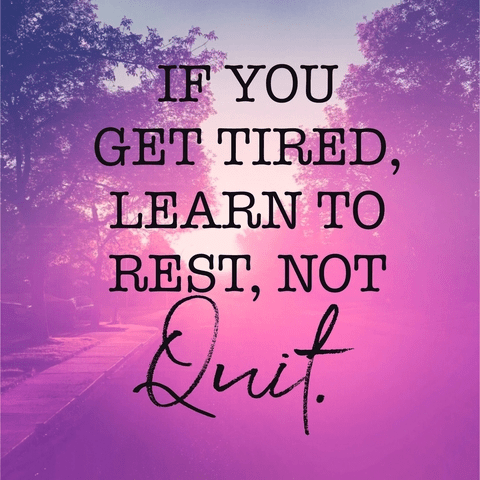
We live in a society that celebrates busyness. The more we accomplish, the more successful we are perceived to be. The hustle culture is alive and well. Who are we if we do not have several irons in the fire? We wear our exhaustion like a badge of honor. To us, it reflects the levels of productivity that we have achieved. We believe that the more we can complete in a single day, the more accomplished we are. In some instances, that may be correct, but for the most part, when keeping that pace for an extended time, we become exhausted. When we are exhausted, our performance levels tend to suffer, which means our productivity will be substandard.
One of the battles I face even today is knowing when to rest. If there is something I have not completed that I wanted to achieve for the day, it is difficult for me to sleep. Even if I decide to go to bed, what I need to complete will ruminate in my mind so much so that I will probably get up and attempt to complete it, regardless of the time. I question my productivity for the day, and I do not feel accomplished unless I complete the task. I actually feel guilty for resting, but this is not healthy. Rest is crucial to renewing the mind, body, and spirit. I am most productive when I have had enough rest. When I burn the candle at both ends, it is difficult for me to function at my optimal best. This work ethic can produce long nights that turn into long days.
In this life, we are pressured to be productive at all costs. With this pressure, we produce what others expect of us and what we expect of ourselves. But at what cost? I’ll tell you, at the cost of rest, sleep, family time, and personal time. We end up working ourselves to the point of exhaustion. No matter how hard we work, we never feel like we have done enough. While working, we begin to experience burnout. We continue working at an abnormal pace, and burnout becomes normalized. Friends, burnout should not be our destiny.
But what if we have been measuring productivity all wrong?
Rest is not the opposite of productivity. Rest is what makes productivity sustainable.
Let’s explore why slowing down and doing less may be one of the most productive things you can do.
Why We Struggle to Rest
- We Attach Our Worth to Productivity
Hustle culture says that success is achieved through continuous work, self-discipline, and sacrifice, where being busy is equated with productivity and personal worth. This culture encourages us to push ourselves beyond limits by having multiple jobs, side projects, and entrepreneurial ventures with minimal rest or downtime. It believes that grinding nonstop will lead to success and achievement. While hustle culture can promote discipline, motivation, and professional growth, it can lead to burnout, chronic stress, anxiety, and sleep disorders, as individuals sacrifice rest and personal life for work. The pressure to constantly perform can create a toxic environment where stopping or taking breaks is viewed as failure. But stopping to get rest can actually make you more productive. We fear being viewed as lazy when we stop to rest, but rest can renew you.
Some of us only feel valuable when we are accomplishing goals. But our value is not determined by what we do, but because of who we are. Who we are on a soul level, who we are at our core. Valuing the things that make you a good person only adds to any goal you will accomplish. Are you honest, trustworthy, have integrity, compassionate, respectful, loyal, disciplined, fair, and responsible? These are the things that truly make you a valuable individual. While achieving goals is satisfying and gives one a sense of accomplishment, it does not make us who we are as a person.
You are more than what you produce. You are more than your job title, your accomplishments, or the number of tasks you complete in a day. Your value exists independent of your performance.
Your worth is not determined by your productivity.
Because at the end of the day, your greatest value will never come from what you accomplish, but from who you are and how you show up in the world.
- We Believe Rest Must Be Earned
Some of us cannot rest until everything is complete. Me included. I feel guilty when I rest, and I have an incomplete task that needs to be done. But we should not feel guilty about getting something we actually need to sustain ourselves. Rest is crucial for optimum performance. It is ok to complete tasks in intervals, so we are not burned out.
The truth is, there will almost always be another email to answer, another chore to finish, or another item to add to our to-do list. If we wait until everything is done before we allow ourselves to rest, we may never rest at all.
Rest is not a reward for finishing your work. It is a requirement for doing your work well.
I challenged myself over the past few weeks. I actually took a week off from the gym, and I delayed writing this post on purpose. When constructing the outline for this post, I realized I was actually exhausted. I took the time to get some much-needed rest. I felt so much better and was actually able to be more productive as a result. It is ok to pause and stop to get the rest you need.
Give yourself permission to rest before burnout forces you to stop.
Because sometimes the most productive thing you can do is rest.
- We Fear Falling Behind
One thing that rest requires is time. You actually have to schedule time to rest.
With the busyness of our schedules, oftentimes, there do not seem to be enough hours in the day to complete all that we have to do. So, we burn the midnight oil in order not to fall behind. Getting less and less rest each day, which leads to fatigue and exhaustion.
Many of us are under time constraints to complete tasks, so in order to meet our goals, we may rob ourselves of sleep and downtime to accomplish these goals. But we must make time for rest, even though we may feel pressure to meet certain expectations.
You cannot be your best self when you do not get enough rest. You can become irritable, impatient, and angry with others without proper sleep.
When you are well-rested, you think more clearly, make better decisions, and have the energy to show up fully in your work and relationships. Rest allows you to work smarter, not just harder.
Trust that taking time to rest is not setting you back; it is helping you move forward in a healthier, more sustainable way.
What Happens When We Never Slow Down
You cannot pour from an empty cup forever.
When we do not slow down, it will have an effect on our physical, mental, emotional, and spiritual well-being.
Not slowing down shows up in our body as fatigue, insomnia, stress, and chronic diseases like heart disease, high blood pressure, obesity, type 2 diabetes, high cholesterol, stroke, and certain types of cancers. All of this can lead to premature death. Left unchecked, chronic stress and exhaustion can have serious consequences for our long-term health. Friends, slowing down and doing less can actually save your life. Don’t let disease cause you to slow down; take the time before these show up in your body.
The mental and emotional effects that present themselves are irritability, anxiety, depression, burnout, and difficulty concentrating. We will also have difficulty regulating our emotions, which can cause a strain on our relationships and make everyday challenges feel overwhelming.
When we are depleted, our spiritual well-being suffers as well. It will present itself as a lack of joy, feeling emotionally numb, feeling disconnected from yourself, and from God. We lose the ability to be fully present in our lives because we are simply trying to survive each day.
Take the time to replenish yourself and renew your mind daily by getting the rest you need.
When you make space for rest, you create space for healing, clarity, joy, and peace. And when you are well-rested, you are better equipped to show up for the people you love, pursue your goals with intention, and fully enjoy the life you are working so hard to build.
Why Slowing Down and Doing Less is Actually Productive
- Rest Improves Focus
Have you ever been so exhausted that you literally could not think properly? You weren’t just imagining; you couldn’t think because you were unable to focus due to being tired. Lack of sleep can have your mind and your body running on empty. You cannot function properly when you lack the sleep needed to renew your mind and body. Rest allows you to make better decisions, think more clearly, and improve concentration. So, get the rest you need so that you are able to operate from a place of being recharged, and you will focus properly.
- Rest Increases Creativity
Creative genius can emerge when adequate rest is received. When you are rested, new ideas can appear that reflect the talents that you embody. Mental space encourages innovation and develops creativity in ways that constant busyness cannot. Creativity needs space to breathe. Rest creates that space. Instead of viewing rest as time lost, begin seeing it as an investment in your ability to think clearly, create freely, and show up fully. Sometimes stepping away is exactly what you need to move forward with renewed inspiration and a fresh perspective.
- Rest Helps Prevent Burnout
When you are operating from a place where you are constantly exhausted, overwhelmed, and running on empty, burnout is often not far behind. Burnout does not happen overnight. It develops gradually when we ignore our need for rest and continue pushing ourselves beyond our limits.
Burnout can show up as chronic fatigue, lack of motivation, irritability, difficulty concentrating, emotional numbness, and a loss of joy in the things we once loved. Even simple tasks can start to feel overwhelming.
Rest is one of the most effective ways to prevent burnout because it gives your mind and body the opportunity to recover before exhaustion becomes overwhelming.
If you are feeling burned out, I urge you to pull away from your tasks and get some much-needed rest. Taking a walk, showering, resting, or simply allowing yourself a quiet moment to think can help prevent or cure your burnout.
- Rest Improves Relationships
Being exhausted can cause us to have poor emotional regulation. Exhaustion can cause irritability, impatience, fatigue, and insomnia. If we are functioning in these modes, our connection with others will be directly affected and not in a positive way. It will be difficult for us to be patient with others when we are fatigued and irritable. Rest allows us to have better relationships with others because we can have greater emotional presence. When we are well-rested, we are better able to listen, communicate effectively, and respond thoughtfully instead of reacting impulsively. We have greater patience, empathy, and understanding for the people we love. The people in your life do not need the exhausted version of you. They need the version of you that is rested, grounded, and emotionally available.
- Rest Allows You to Enjoy Life
Life is meant to be experienced, not just managed. You will not be able to fully enjoy life when you are operating in the mode of exhaustion. Life will pass you by because you will not be able to appreciate the simple moments. Those moments that make life worth living. Like the smile on your baby’s face, spending time with your teenager, a good home-cooked meal, or a gentle conversation with your spouse. When we are tired, we tend to miss those moments because we don’t have the energy to recognize them. Rest allows us to slow down and be present. It gives us the ability to savor ordinary moments that often become our most cherished memories. When we are rested, we are more attentive, more grateful, and more connected to the people and experiences that matter most. Do not become so busy making a living that you forget to make a life. Rest gives you the opportunity to pause, breathe, and fully experience the beauty that is already all around you.
Practical Ways to Embrace the Art of Rest
- Schedule Rest Like You Schedule Work
We must schedule opportunities for rest. Not just the recommended 8 hours of sleep each night, but also opportunities provide moments of downtime. Time to recharge, renew, and simply breathe.
We schedule all the other activities in our lives. Meetings, kids’ activities, appointments, and other responsibilities, yet we expect to rest only when we have time left over. The truth is, there will always be another task to complete. If we do not intentionally make room for rest, it often gets pushed aside. Treat rest with the same importance you give your work commitments. Block time on your calendar for activities that restore you, such as taking a walk, reading a book, spending time in nature, enjoying a quiet cup of tea, praying, journaling, or simply sitting in silence.
Remember, you do not have to earn rest. You simply need to honor your need for it. When you intentionally make space for rest, you create space for clarity, creativity, joy, and peace.
- Creating Small Pauses Throughout Your Day
Rushing through the day may leave little time to pause and reflect, but creating opportunities that provide moments throughout your day for relaxation may help you be more productive.
These opportunities may include, but are not limited to, deep breathing, short walks, quiet moments, prayer, journaling, or simply stepping away from your work for a few minutes to reset your mind. Small pauses give your nervous system a chance to recover from the constant demands of the day. They help reduce stress, improve focus, and allow you to return to your responsibilities with greater clarity and intention.
These small moments may seem insignificant, but they add up over time. They remind you that you are not a machine designed to operate nonstop.
Give yourself permission to pause throughout your day. You may be surprised to discover that slowing down, even briefly, helps you accomplish more while feeling less overwhelmed.
- Give Yourself Permission to Do Nothing
We do not have to schedule every moment of our day to be filled with activities. It is ok to simply do nothing sometimes. We should embrace stillness without guilt.
In a world that constantly tells us to be productive, doing nothing can feel uncomfortable. We may feel pressure to always be accomplishing something, checking off another task, or making progress toward our goals. But there is value in simply being instead of constantly doing. Stillness gives your mind an opportunity to slow down and your body a chance of recovering. It creates space for reflection, creativity, and peace. Some of your most meaningful insights may come during moments when you are not trying to accomplish anything at all.
Remember, you are a human being, not a human doing. Give yourself permission to pause, embrace stillness, and simply exist for a while. Sometimes the most restorative thing you can do is nothing at all.
- Develop a Restful Evening Routine
How you end your day matters just as much as how you begin it. Creating a restful evening routine signal to your mind and body that it is time to slow down, release the stress of the day, and prepare for restorative sleep.
Many of us move from work, responsibilities, and screen time straight into bed without giving ourselves an opportunity to unwind. As a result, our minds continue racing long after our heads hit the pillow.
A calming evening routine does not have to be complicated. Simple practices such as dimming the lights, putting your phone away an hour before bed, drinking herbal tea, taking a warm shower, reading a book, journaling, praying, or practicing gratitude can help create a sense of peace before sleep.
When you create space to unwind each night, you improve your sleep, reduce stress, and wake up feeling more refreshed and prepared for the day ahead. Create an evening routine that invites peace into your life and allows your mind, body, and spirit to fully rest.
Rest Is an Investment, Not an Interruption
Rest is not taking away from your goals. It is helping you reach them.
Many of us view rest as a distraction from our responsibilities, something we can only enjoy once everything is finished. But the truth is, rest is not a reward for productivity; it is what makes productivity sustainable.
When you allow yourself time to rest, you return to your work with greater focus, creativity, patience, and energy. You make better decisions, communicate more effectively, and have the capacity to show up fully in every area of your life.
You do not have to earn your right to rest.
You are human, not a machine. Your body, mind, and spirit were designed to need periods of renewal.
The world may encourage you to keep pushing, but sometimes the most productive thing you can do is pause.
Allow yourself to slow down.
Allow yourself to breathe.
Allow yourself to be restored.
Because when you invest in rest, you are investing in your health, your relationships, your peace, and the life you are working so hard to build.
Rest is not laziness.
It is preparation for what comes next.
This week, I invite you to rest. Let it be a quiet declaration that you can take time to recharge. You deserve a life that feels calm, grounded, and whole.
If you’re ready to begin cultivating it more intentionally:
• Download the 30-Day Gratitude Journal and start tending your heart daily.
• Join our email community for encouragement, tools, and gentle reminders to live intentionally.
• Share this post with someone who may need peace in their life right now.
We are building something beautiful here; a space where peace is practiced, gratitude is honored, and contentment is possible.
And I’m so grateful you’re on this journey with me.
Reflect. Give Thanks. Rejoice.